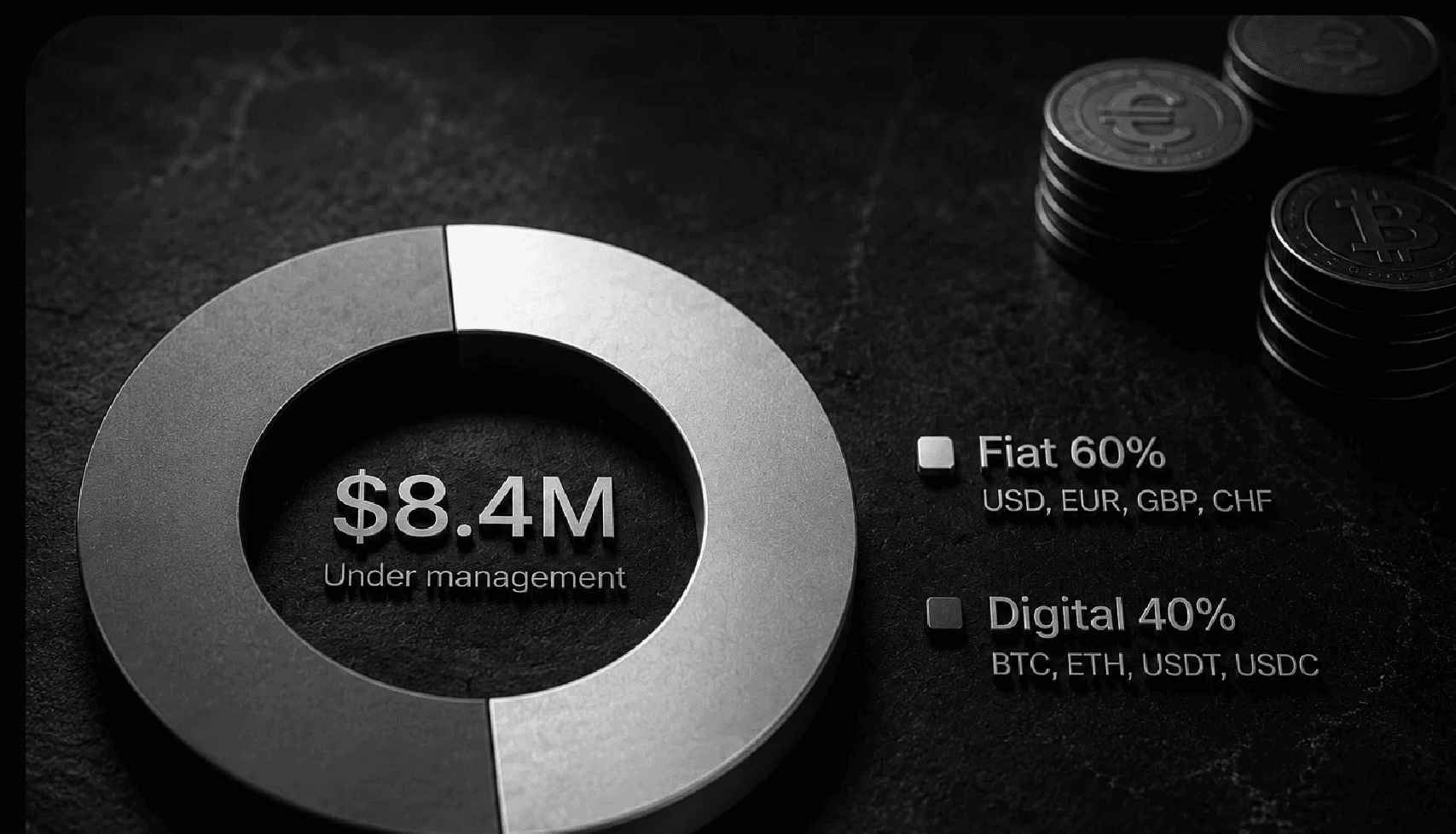
More businesses are holding a portion of their treasury in digital assets, accepting crypto from customers, or paying vendors and contractors in stablecoins. Doing this well is not about speculation. It is about building the same discipline into digital assets that a finance team already applies to cash, foreign exchange, and short-term investments. This resource lays out a practical framework for a corporate digital asset treasury strategy.
Start with policy, not with assets
Before a single token moves, the treasury function needs a written policy that answers a few basic questions. What assets is the business permitted to hold, and in what proportions? What is the purpose of each holding, whether that is operational liquidity, payment acceptance, or a strategic reserve? Who is authorized to initiate and approve transactions, and at what thresholds? A policy that is agreed at the board or executive level turns ad hoc decisions into a governed process, and it is the document your auditors and banking partners will want to see.
The policy should also define risk limits in plain terms. That includes concentration limits on any single asset, a stance on volatility, and a clear position on which assets are held as stablecoins versus more volatile tokens. Most corporate treasuries that use digital assets keep the majority of any operational balance in fully-backed stablecoins precisely because they behave like the cash the business already understands.
Deciding what to hold
For most businesses, the working balance sits in stablecoins. USDC and USDT are dollar-denominated, widely accepted, and move on multiple networks, which makes them practical for payments and short-term liquidity. A strategic reserve, if the policy allows one, might include a measured allocation to Bitcoin or Ethereum, held with a longer horizon and a clear rationale. The distinction that matters is between assets held to transact and assets held to appreciate, because they call for different controls and different accounting treatment.
- Operational balances: stablecoins such as USDC and USDT, sized to near-term payment and settlement needs.
- Strategic reserves: a governed allocation to major assets like BTC or ETH, if the treasury policy permits it.
- Settlement float: the balance needed to move value across on-ramp and off-ramp flows without delay.
Custody and controls
Custody is where digital asset treasury succeeds or fails. Holding assets in a single private key on a laptop is not a treasury strategy, it is an operational risk. Institutional custody uses multi-party computation or multi-signature schemes so that no single person can move funds alone, and it enforces policy in software: whitelisted addresses, transaction limits, and multi-approver workflows. GlacierPay custodies client crypto with Fireblocks, an institutional MPC platform, so that the controls in your treasury policy are enforced technically, not just on paper.
Beyond custody, the same segregation of duties you apply to cash should apply here. The person who initiates a transaction should not be the person who approves it. Address books should be maintained and reviewed. Every movement should be logged and reconcilable. These are ordinary treasury controls, applied to a new asset class.
Managing liquidity and conversion
A treasury needs to convert between fiat and crypto on demand, and to do so without moving the market against itself. This is where an OTC desk becomes part of the strategy rather than an afterthought. Instead of routing conversions through a public exchange and absorbing slippage, the treasury requests a firm quote and settles a block trade at a known price. With settlement typically completing in around thirty minutes and support across BTC, ETH, USDT, USDC, and SOL, the desk becomes the conversion layer between the business's bank accounts and its digital asset holdings.
Planning liquidity means knowing when you will need fiat and when you will need crypto, and keeping enough float to meet obligations without forced conversions at bad prices. A predictable settlement window and a firm-quote relationship let the treasury forecast with confidence rather than react to volatile on-screen prices.
Compliance and accounting
A digital asset treasury has to satisfy the same stakeholders as the rest of finance: auditors, tax authorities, and banking partners. That means keeping clean records of every acquisition, disposal, and transfer, with cost basis and timestamps. It means working with counterparties that operate inside a real regulatory framework. GlacierPay is registered as a Money Services Business with FINTRAC, Canada's federal anti-money-laundering regulator, under registration number C10001598, and every client relationship runs through KYB onboarding and ongoing transaction screening. Choosing regulated counterparties keeps your own compliance posture defensible.
Putting it together
A sound digital asset treasury strategy is not exotic. It is policy first, then the right assets, then institutional custody, then a reliable conversion and liquidity layer, all wrapped in compliance and clean accounting. Businesses that approach it this way capture the operational benefits of digital assets, faster settlement, cheaper cross-border payments, and programmable money, without taking on risks their finance team cannot govern. The tools to do it properly, from Fireblocks custody to firm-quote OTC execution, are available to any business willing to build the framework first.